
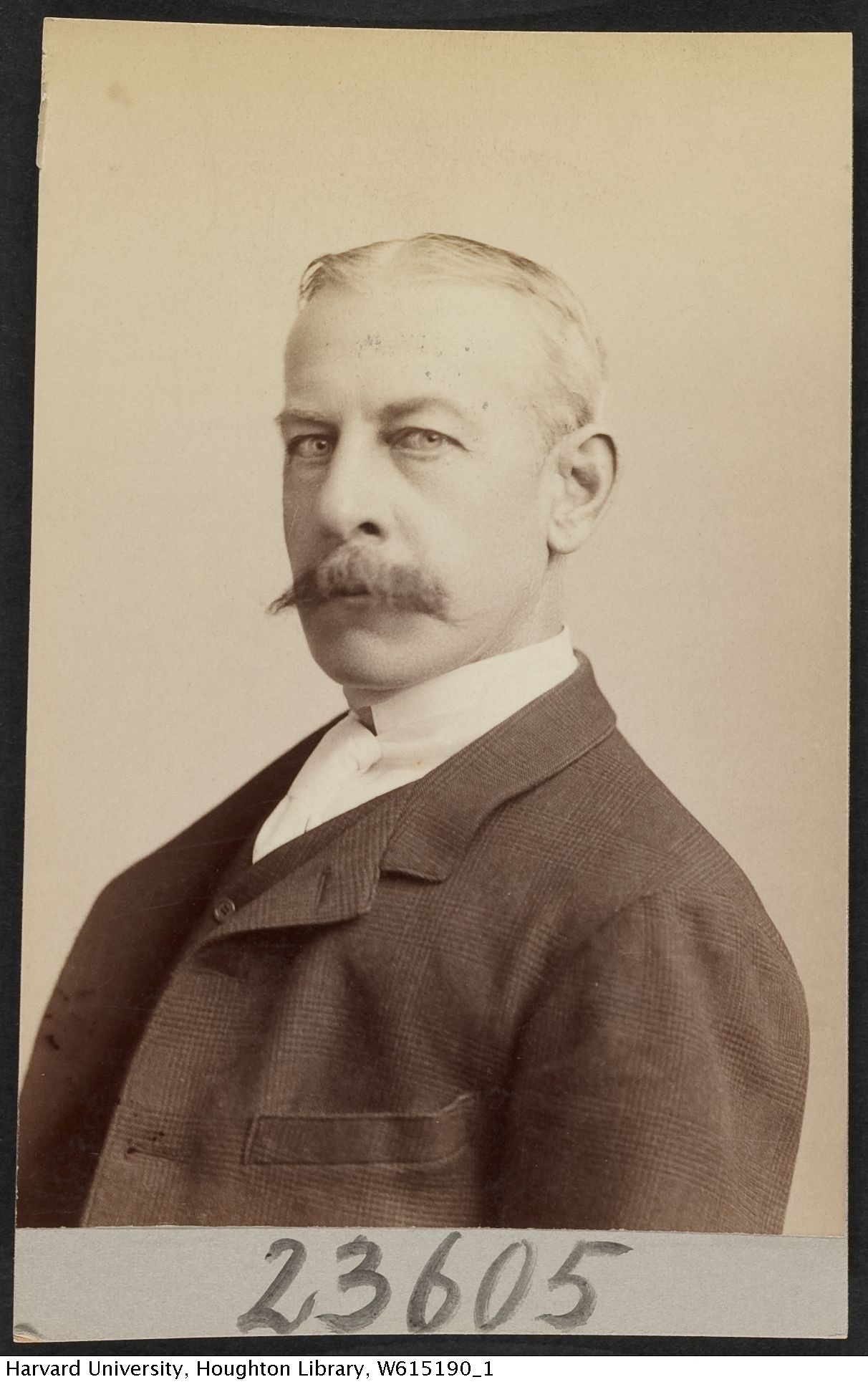
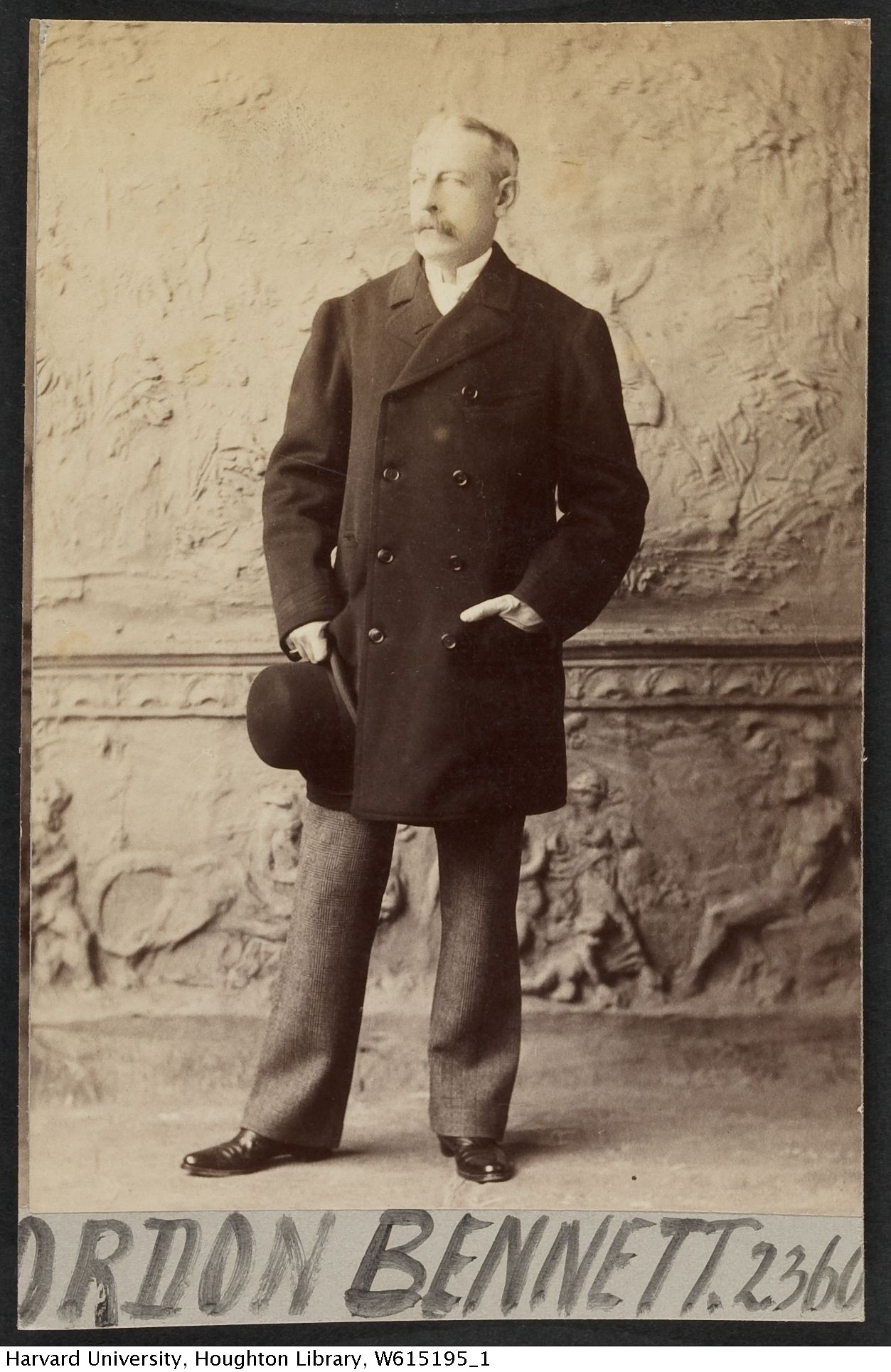
James Gordon Bennett Jr.
Publisher, yachtsman, and patron of exploration and sport.

Photographer unidentified · Public domain
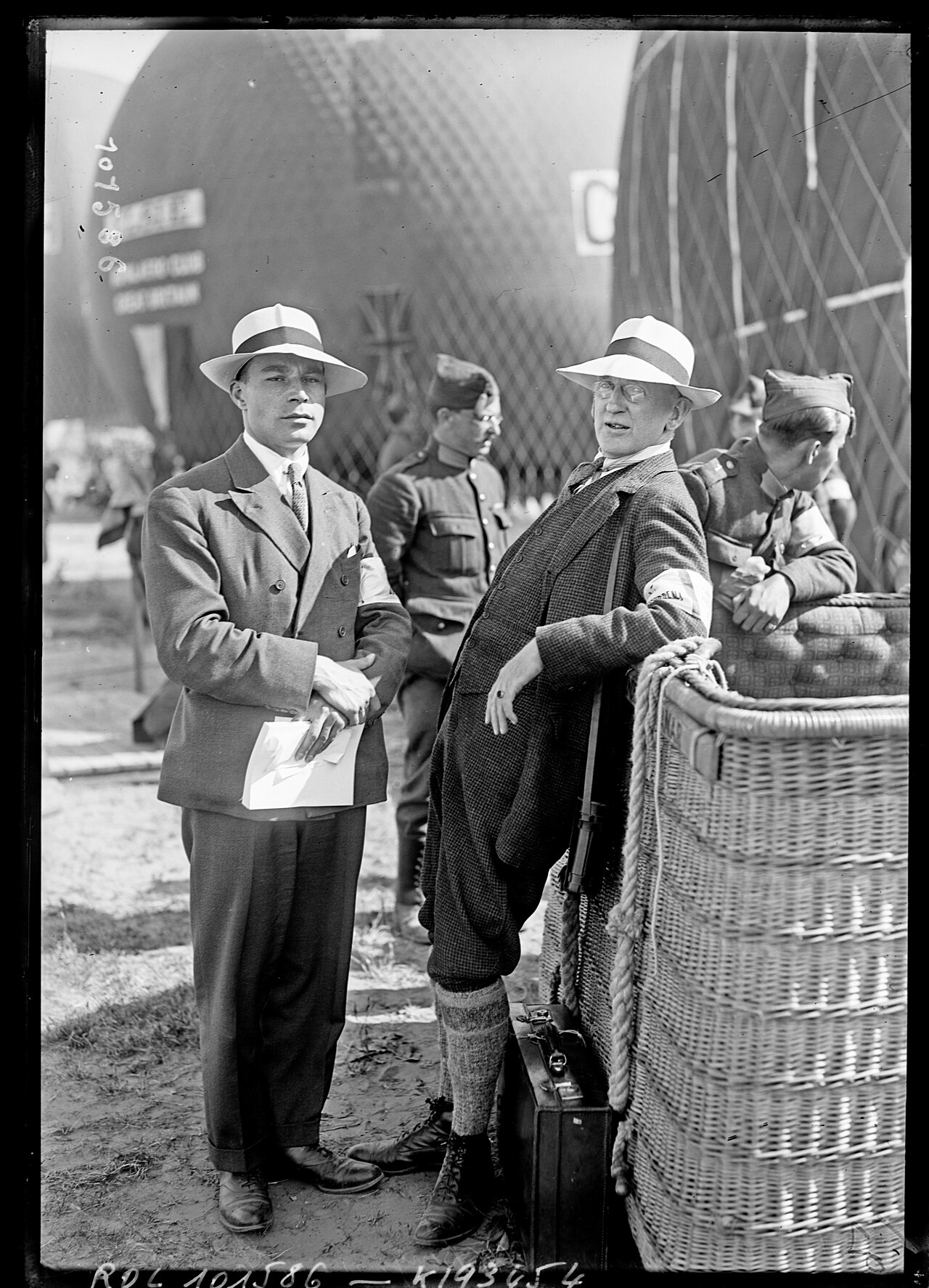
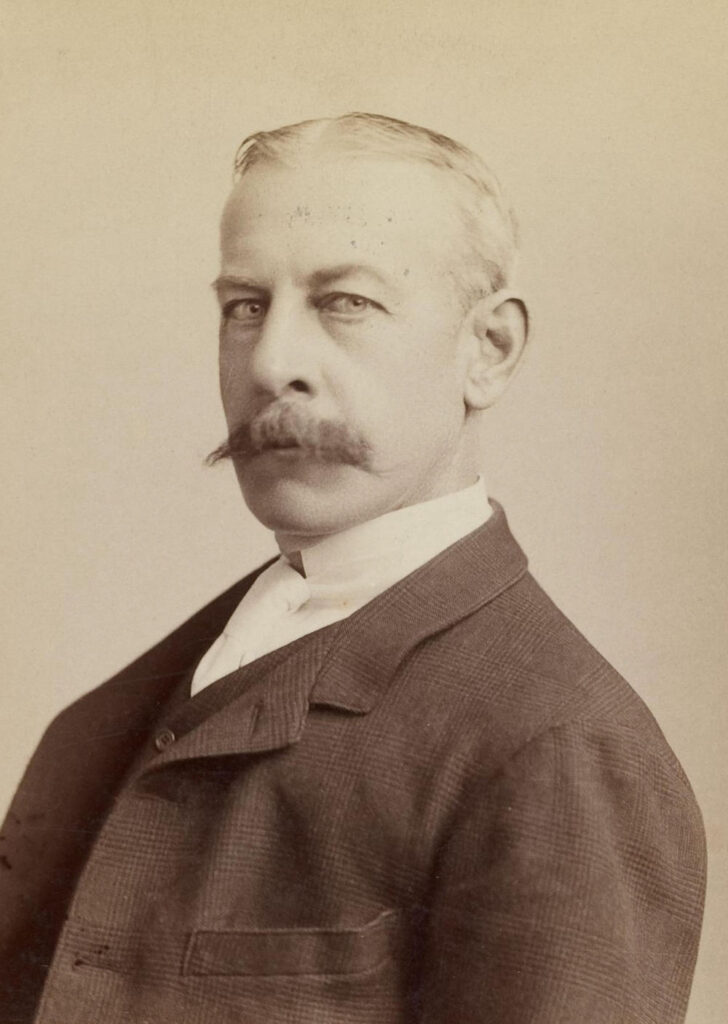
James Gordon Bennett Jr. (May 10, 1841 – May 14, 1918) was an American publisher who took control of the New York Herald from his father, James Gordon Bennett Sr. He expanded the paper's global reach by financing expeditions and launching international editions. Known for his flamboyant lifestyle and sports patronage, he organized the first polo and tennis matches in the United States and his yacht won the first trans-oceanic yacht race. His controversial reputation is thought to have inspired the British expression 'Gordon Bennett!'
- known_for
- Publisher of the New York Herald; financing Stanley's expedition to find Livingstone; organizing first U.S. polo and tennis matches; his yacht winning the first trans-oceanic yacht race; inspiration f
Lore & Background
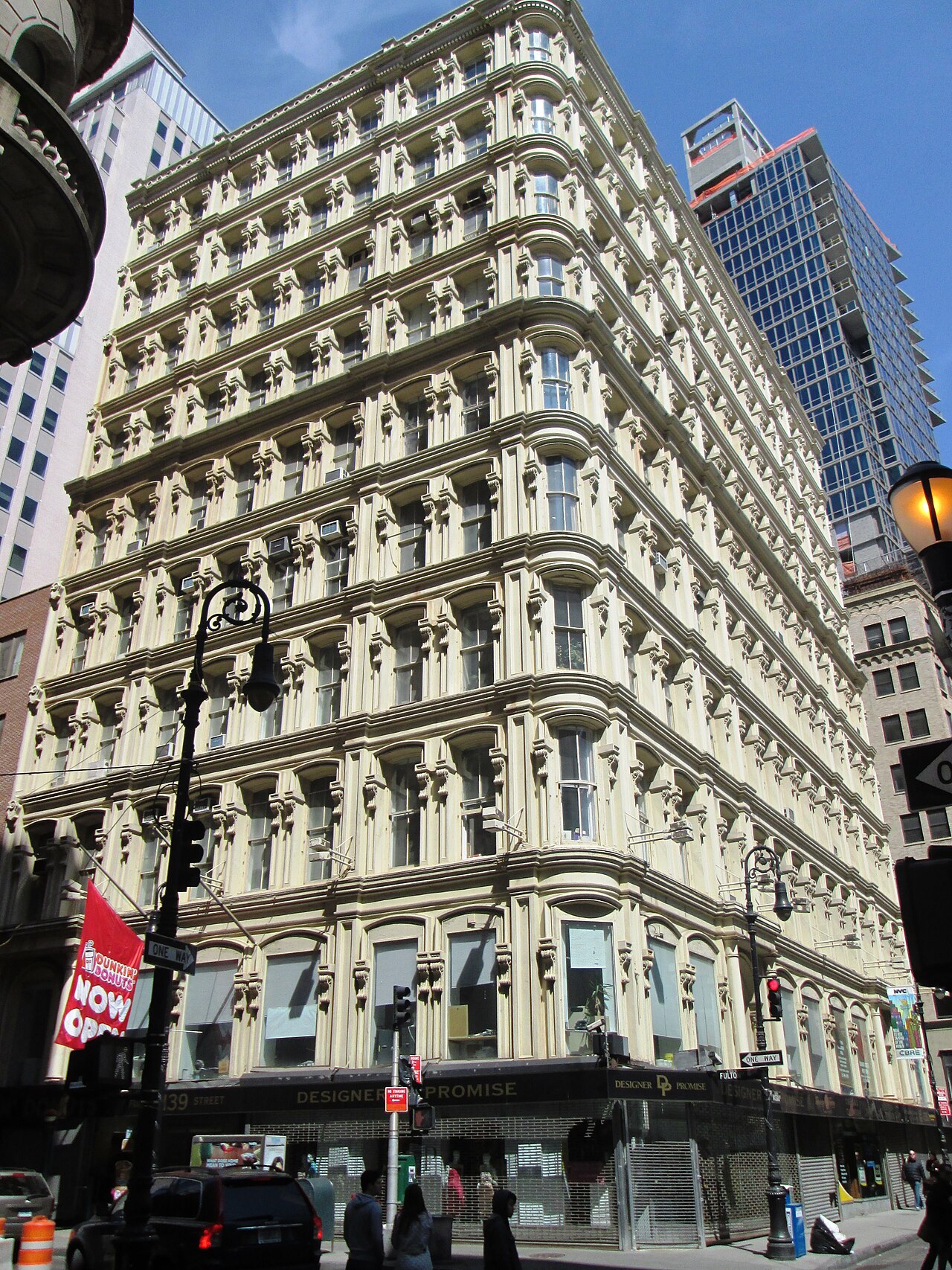
Bennett was born in New York City, the only son of James Gordon Bennett Sr., founder of the New York Herald. He grew up mostly in France and attended the École polytechnique. In 1861 he moved to the United States, enlisted in the Union Navy, and volunteered his schooner yacht Henrietta for the U.S. Revenue Marine Service during the Civil War, serving as a third lieutenant. In 1867, under his father's tutelage, he founded The Evening Telegram, and later that year his father turned control of the Herald over to him. Bennett raised the paper's profile by financing Henry Morton Stanley's 1869 expedition to Africa to find David Livingstone in exchange for exclusive accounts. In 1872 he commissioned the Bennett Building in Manhattan, and in 1890 a new Herald building at Sixth and Broadway. In 1887 he established a Paris edition, and in 1880 a London edition, the forerunner of the New York Times International Edition. In 1883 he co-founded the Commercial Cable Company.
Reader's Guide
James Gordon Bennett Jr. was a transformative figure in American journalism and a prominent patron of sports and exploration. As publisher of the New York Herald, he expanded its international reach by financing Henry Morton Stanley's expedition to find David Livingstone and by launching the Paris Herald, which evolved into the International Herald Tribune. His sponsorship of the USS Jeannette's Arctic voyage, though tragic, boosted the paper's circulation. Bennett's personal wealth and flamboyance enabled him to pioneer organized sports in the United States: he arranged the first polo match and the first tennis match in the country, and he won the first trans-oceanic yacht race. His name became attached to several Gordon Bennett Cups in yachting, automobile racing, ballooning, and aviation, fostering international competition. His controversial behavior, including a notorious 1877 scandal, is thought to have inspired the British exclamation 'Gordon Bennett!' as an expression of incredulity. Bennett's legacy endures through the buildings he commissioned, the newspaper lineage he established, and the sporting trophies that bear his name.
Did You Know?
- Bennett's yacht Henrietta won the first trans-oceanic yacht race in 1866, with a time of 13 days, 21 hours, 55 minutes.
- He financed Henry Morton Stanley's 1869 expedition to Africa to find David Livingstone in exchange for exclusive accounts in the New York Herald.
- The phrase 'Gordon Bennett!' used as an expression of incredulity is thought to be inspired by his controversial reputation.
- Bennett organized the first polo match in the United States at Dickel's Riding Academy in New York and helped found the Westchester Polo Club in 1876.
From a Shack in South Carolina to the Gospel Stage
James Joseph Brown entered the world on May 3, 1933, inside a small wooden shack in Barnwell, South Carolina. His mother, Susie, was only sixteen, and his father Joseph was twenty-one. A clerical error on the birth certificate swapped his first and middle names, a small bureaucratic accident that would attach itself to one of the most iconic figures in American music. The family endured grinding poverty in Elko before relocating to Augusta, Georgia, when James was roughly four or five years old. In that city, a young James first stepped onto a stage at the Lenox Theater in 1944, winning a talent show with a ballad called 'So Long.' He also entertained World War II troops with buck dances near a canal bridge, where he first caught a glimpse of Howlin' Wolf strumming guitar. Those early encounters with rhythm and performance, combined with the electric energy of Louis Jordan's 'Caldonia,' planted the seed of a lifelong obsession with showmanship. By his mid-teens, Brown had dabbled in boxing, learned piano, guitar, and harmonica, and already possessed a hunger for the stage that no amount of hardship could extinguish.
The Crucible of Toccoa and the Birth of a Sound
At sixteen, Brown found himself behind bars at a juvenile detention center in Toccoa, Georgia, after a robbery conviction. What might have been a dead end instead became the crucible of his musical identity. There he formed a gospel quartet with four cellmates, including Johnny Terry, and earned the nickname 'Music Box.' It was at a baseball game outside the facility that Bobby Byrd first heard of this young singer. Byrd and his family later helped secure Brown's early release, and the teenager made a solemn promise to the court: he would 'sing for the Lord.' Paroled on June 14, 1952, under a work sponsorship arranged by local businessman S. C. Lawson, Brown joined the Ever-Ready Gospel Singers, a group that included Byrd's sister Sarah. By 1954, that gospel formation had morphed through several iterations—the Gospel Starlighters, the Avons, the Toccoa Band—before settling on the name Famous Flames. Drawing inspiration from Hank Ballard and the Midnighters, the Orioles, and Billy Ward and his Dominoes, Brown and Byrd forged a rhythm-and-blues sound that would eventually fracture open into something entirely new.
From Soul to Funk: Reinventing the Groove
By the mid-1950s, Brown had already established himself as a magnetic frontman, building a reputation through ballads like 'Please, Please, Please' and 'Try Me' that showcased his explosive stage presence. His commercial peak arrived in the 1960s, anchored by the legendary live album Live at the Apollo and a string of chart-toppers including 'Papa's Got a Brand New Bag,' 'I Got You (I Feel Good),' and 'It's a Man's Man's Man's World.' Yet the most consequential shift came in the late 1960s, when Brown deliberately abandoned the blues-and-gospel continuum that had defined his earlier work. In its place he constructed a lean, interlocking rhythmic architecture—stripped-down grooves that prioritized the downbeat and the pocket over melodic ornamentation. This was the birth of funk. By the early 1970s, with the formation of the J.B.s, the sound was fully crystallized in records like 'Get Up (I Feel Like Being a) Sex Machine' and 'The Payback.' Simultaneously, Brown channeled his platform into pointed social commentary, most memorably with the 1968 anthem 'Say It Loud – I'm Black and I'm Proud,' proving that a dancer-singer could be both a groove architect and a voice for a generation.
A Legacy Measured in Charts and Inductions
Few artists in popular music have accumulated a recognition record quite like Brown's. He logged seventeen number-one singles on the Billboard R&B charts and holds the unusual distinction of having the most Hot 100 entries that never reached the top spot. On January 23, 1986, he became one of the very first ten inductees into the Rock and Roll Hall of Fame. His posthumous honors continued to pile up: the first class of the Rhythm & Blues Music Hall of Fame in 2013 as a performer, a second induction in 2017 as a songwriter, plus placements in the Black Music & Entertainment Walk of Fame and the Songwriters Hall of Fame. In Joel Whitburn's comprehensive analysis of Billboard R&B data spanning 1942 to 2010, Brown sits at number one among the Top 500 Artists. Rolling Stone ranked him seventh on its list of the 100 Greatest Artists of All Time and forty-fourth among the 200 Greatest Singers. His recordings have been sampled relentlessly by hip-hop producers, ensuring that the rhythmic DNA he codified in the late 1960s continues to pulse through new generations of music long after his death from pneumonia on Christmas Day, 2006.
Gallery
Frequently Asked Questions
Who is James Gordon Bennett Jr.?
He was an American newspaper publisher, yachtsman, and patron of exploration who inherited the New York Herald from his father and turned it into a globally distributed paper. He is also remembered for his flamboyant personal life and his role in introducing major sports to the United States.
What was James Gordon Bennett Jr.'s role in journalism?
After taking over the New York Herald, he dramatically broadened its international footprint by underwriting foreign editions and bankrolling high-profile expeditions, most notably Henry Morton Stanley's search for David Livingstone. His backing helped make the paper a household name far beyond American shores.
What sports and sailing achievements is James Gordon Bennett Jr. credited with?
He is widely credited with staging the first polo and tennis matches held in the United States, and his yacht took the prize in what is recognized as the inaugural trans-oceanic yacht race. These feats cemented his reputation as a bold patron of competitive sport.
Why is the British exclamation 'Gordon Bennett!' connected to him?
His loud, controversial public persona apparently left such a mark on British readers that his name became a colorful interjection of frustration or disbelief. The phrase stuck in everyday British speech long after his death.
How did James Gordon Bennett Jr.'s life end?
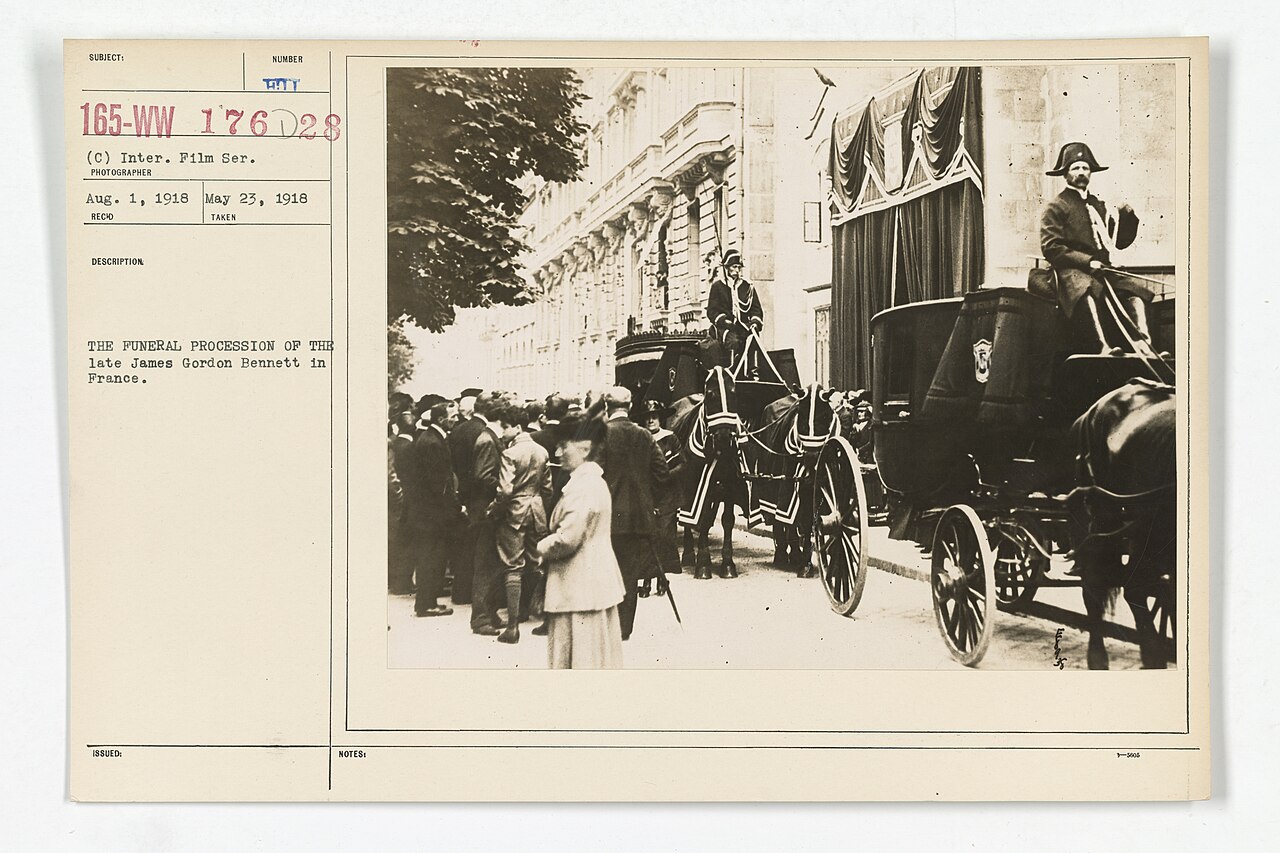
He died on May 14, 1918, just four days after turning 77, closing out a career defined by bold publishing ventures, sporting firsts, and a flair for the spectacular.
More in Investigative Journalists And Editors 1-22
Spotted an error? Know more?
This is a living reference — every entry is fact-audited, and reader corrections feed straight into our audit queue. Suggest an edit · See this site's audit record