
James Augustus Hicky
Founder of India's first printed newspaper, Hicky's Bengal Gazette.

James Augustus Hicky · Public domain
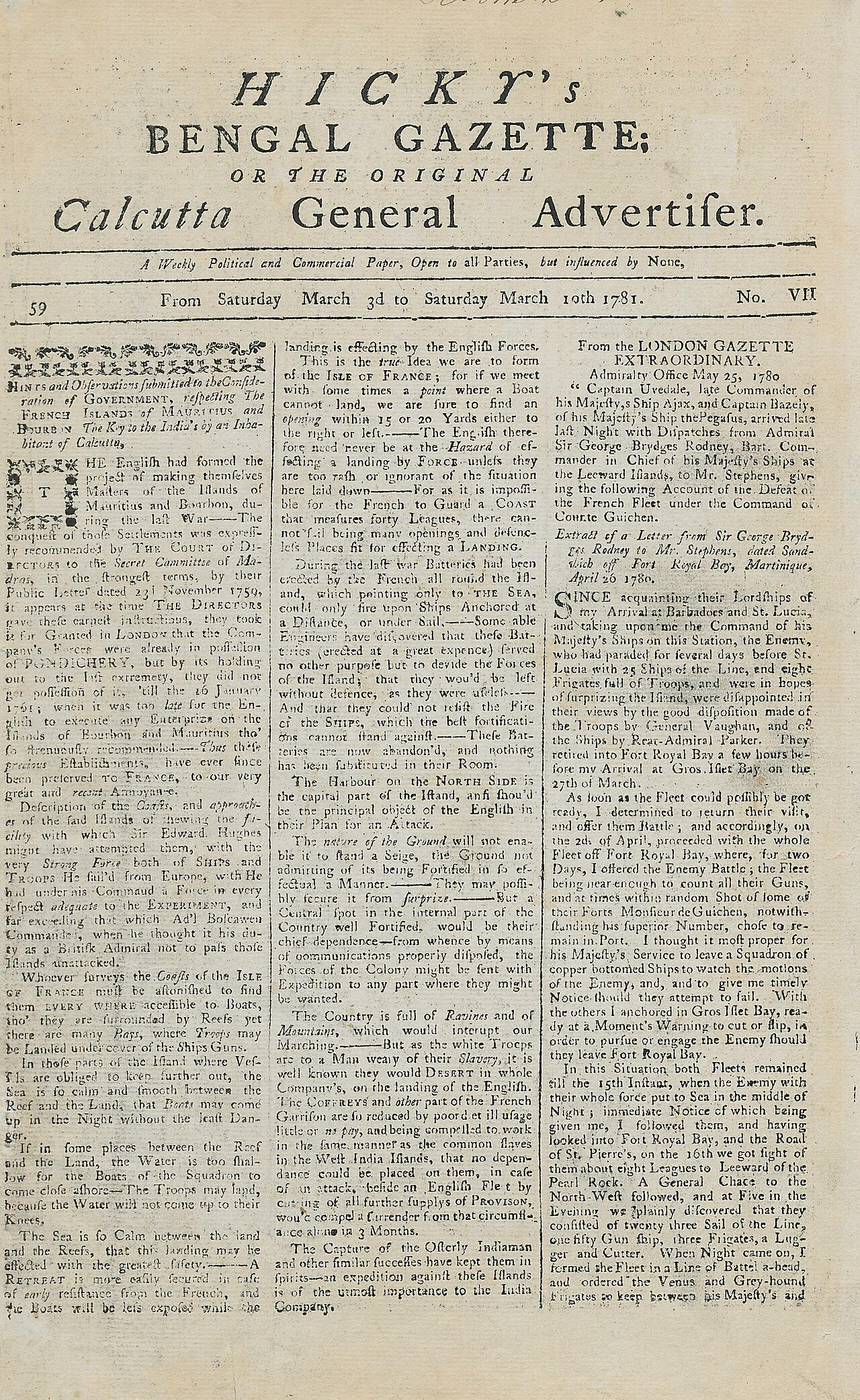
James Augustus Hicky, an Irishman, introduced India’s first printed newspaper, *Hicky’s Bengal Gazette*, in 1780. Born in Ireland around 1740, he moved to London as a youth to apprentice with Scottish printer William Faden. Instead of completing his apprenticeship, Hicky became a clerk for lawyer William Davy. He later abandoned law, briefly tried working as a surgeon in London, and in 1772 sailed to Calcutta as a surgeon’s mate on an East Indiaman.
In Calcutta, Hicky worked as both a surgeon and a merchant, shipping goods along the coast. His business failed in 1776 when his ship returned with badly damaged cargo. Unable to satisfy his creditors, he entered debtors’ prison that October. While incarcerated, Hicky obtained a printing press and types, launching a printing business from jail in 1777. In 1778, he hired lawyer William Hickey (no relation) to clear his debts and secure his release.
Hicky began publishing *Hicky’s Bengal Gazette* on 29 January 1780. Initially neutral, he shifted course after learning of a rival paper, *The India Gazette*. He accused East India Company employee Simeon Droz of backing the rival’s editors, claiming Droz and Marian Hastings, wife of Governor-General Warren Hastings, had refused a bribe. In retaliation, Hastings’ Supreme Council banned Hicky from using the postal service. Hicky decried this as a violation of free expression and accused Hastings of corruption, tyranny, and erectile dysfunction. He also targeted other British leaders in Calcutta, including Chief Justice Elijah Impey and missionary Johann Zacharias Kiernander. Hastings and Kiernander sued for libel. After four trials in June 1781, the Supreme Court convicted Hicky and jailed him. He continued printing from prison, persisting in his accusations, until Hastings filed new lawsuits. The court seized his types, and *Hicky’s Bengal Gazette* ceased on 30 March 1782.
Hicky was freed around Christmas 1784 when Hastings, preparing to return to England for impeachment, forgave his debts. Little is known of his later years; his health was broken after three years in jail, and he lived in poverty. He died on a boat to China in October 1802. Though disliked by Hastings, Hicky’s paper influenced many Indians to start newspapers. His printing office trained later printers who founded their own papers, fostering a vibrant Bengal press. No images of Hicky survive, but hi
- born
- c. 1740, Ireland
- died
- October 1802, on a boat to China
- field
- Printing, journalism
- nationality
- Irish
- known_for
- Founding the first printed newspaper in India, Hicky's Bengal Gazette
Lore & Background
James Augustus Hicky was born in Ireland around 1740. As a young man, he moved to London to apprentice with Scottish printer William Faden, but never took his freedom from the printers' guild. Instead, he worked as a clerk for lawyer William Davy, then briefly attempted to practice as a surgeon in London before sailing to Calcutta in 1772 as a surgeon's mate on an East Indiaman. In Calcutta, he worked as both a surgeon and a merchant, shipping goods along the coast, but his business collapsed in 1776 when his vessel returned with badly damaged cargo. Unable to satisfy his creditors, Hicky entered debtors' prison in October 1776. While in jail, he acquired a printing press and types, and by 1777 began a printing business from prison. In 1778, he hired lawyer William Hickey (no relation) to clear his debts and secure his release.
Reader's Guide
Hicky's significance lies in his role as the pioneer of printed journalism in India. His newspaper, Hicky's Bengal Gazette, began publication on 29 January 1780 and initially maintained a neutral editorial stance. However, after learning of a rival paper, The India Gazette, Hicky accused East India Company employee Simeon Droz of supporting the rival because Droz and Marian Hastings, wife of Governor-General Warren Hastings, had refused a bribe. In retaliation, Hastings' Supreme Council forbade Hicky from using the post office to mail his paper. Hicky responded by accusing Hastings of corruption, tyranny, and erectile dysfunction, and also accused other British leaders, including Chief Justice Elijah Impey and missionary Johann Zacharias Kiernander, of corruption. Hastings and Kiernander sued Hicky for libel. After four trials in June 1781, the Supreme Court found him guilty and sentenced him to jail. Hicky continued printing from prison until fresh lawsuits by Hastings led to the seizure of his types by court order on 30 March 1782, ending the Gazette. Hicky was freed around Christmas 1784 when Hastings, about to sail to England to face impeachment, forgave his debts. His health was ruined by three years in jail, and he lived in poverty until his death on a boat to China in October 1802.
Did You Know?
- Hicky launched the first printed newspaper in India, Hicky's Bengal Gazette, on 29 January 1780.
- He printed his newspaper from debtors' prison both before and after his libel conviction.
- Warren Hastings forgave Hicky's debts around Christmas 1784, shortly before Hastings left for England to face impeachment.
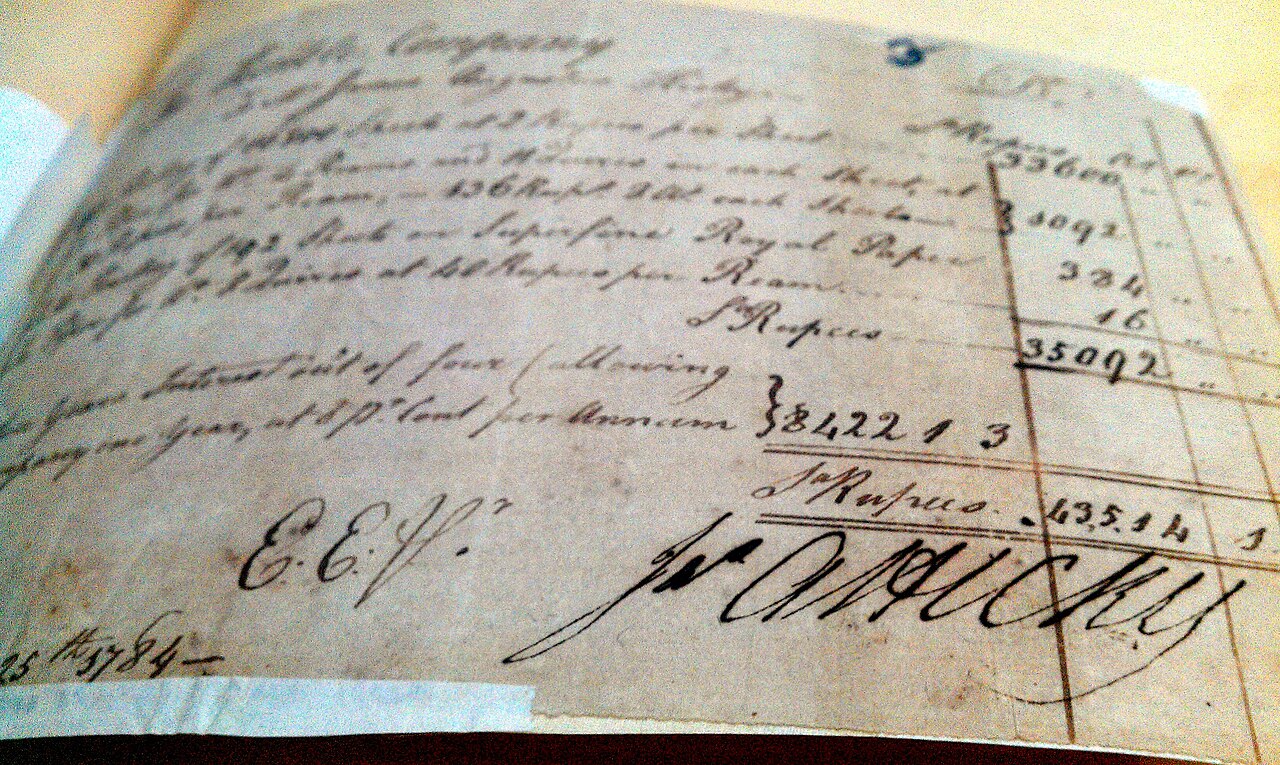
- No images of Hicky survive, but his signature and handwriting can be found on old documents.
The Father of Indian Press
James Augustus Hicky, a British citizen operating in the Indian subcontinent during the early nineteenth century, is widely recognized as the "father of Indian press." His claim to this title rests on his role in introducing the first newspaper to the region during the period of British colonial rule. The broader historical narrative credits British administrators with laying the groundwork for what would become independent journalism in the subcontinent, and Hicky stands at the very origin of that tradition. His work emerged within a complex paradox: the press foundation in India was, in its earliest form, established under the umbrella of British imperial administration, yet it also carried the seeds of self-censorship imposed by the very power structure it operated under. Hicky's presence in this story is therefore both foundational and contradictory—a British subject who helped create a journalistic tradition that would eventually become a powerful voice for leaders, activists, and the government itself across the subcontinent. His contribution marks the starting point from which an entire tradition of print media in India would grow and evolve over the following decades and centuries.
Writing Around the Censors
Hicky's approach to journalism was shaped by the need to report on sensitive matters while navigating the legal risks of colonial rule. He wrote articles independently, focusing on corruption and other scandals within the administration, yet he took deliberate care to avoid directly naming the officials involved. Rather than using names that could expose him to legal action, Hicky employed multiple nicknames throughout his articles when referring to the authorities. This technique of indirect reference allowed him to critique the conduct of those in power while maintaining a layer of plausible deniability that made it harder for the administration to pin specific accusations on identifiable individuals. His method reveals a journalist operating under significant constraints, where the threat of lawsuits and the broader machinery of imperial control meant that even the act of naming a corrupt official could carry serious personal consequences. Despite these limitations, Hicky managed to produce content that was clearly critical of the government, demonstrating that independent reporting was possible even within the restrictive environment of early colonial India.
The Seizure of the Bengal Gazette
The publication that bore Hicky's name and vision, the Bengal Gazette, ultimately met a fate that foreshadowed the long history of press suppression in the subcontinent. In 1807, the colonial authorities seized the newspaper, citing its publication of anti-government articles as the justification for the action. This seizure represented a direct confrontation between Hicky's independent editorial voice and the power of the British administration, which viewed such content as a threat to its authority. The incident underscored the precarious position of even the earliest Indian newspapers, which operated in a landscape where the same imperial government that had facilitated the introduction of print media also retained the power to shut it down at will. Hicky's experience with the Bengal Gazette thus became an early and stark example of the tensions that would define the relationship between the press and the state in India for generations to come. The seizure demonstrated that the freedom to publish was conditional and could be revoked whenever the content crossed the boundaries the authorities deemed acceptable.
A Foundation for Independent Journalism
Hicky's brief but significant career as a publisher set in motion a tradition of independent journalism in the Indian subcontinent that would endure and expand long after his time. The British administrators are often credited with introducing what can be described as independent journalism through the English-language press, and Hicky's work as the pioneer of this tradition established the foundational principles upon which subsequent generations of journalists would build. In the decades and centuries that followed, the press in the subcontinent became an instrumental force for a wide range of actors—political leaders, social activists, and even the government itself. Hicky's early experiments in reporting on corruption and scandal, conducted under the shadow of imperial censorship and the constant threat of legal reprisal, created a precedent for journalistic independence that later movements and publications would draw upon. His legacy is thus inseparable from the broader story of how print media evolved in India from a colonial introduction into a vital and contested instrument of public discourse.
Gallery
Frequently Asked Questions
Who is James Augustus Hicky?
He was an Irish-born printer and journalist best known for launching Hicky's Bengal Gazette in 1780, the first printed newspaper published in India.
What was Hicky's life like before he reached India?
Born in Ireland around 1740, he traveled to London as a youth to apprentice with Scottish printer William Faden, then drifted into clerical work for a lawyer and a brief stint as a surgeon. In 1772 he sailed to Calcutta as a surgeon's mate on an East Indiaman.
What newspaper did James Augustus Hicky found?
He established Hicky's Bengal Gazette in 1780, which holds the distinction of being the first printed newspaper in India.
How did James Augustus Hicky's story end?
He passed away in October 1802 while traveling aboard a ship headed for China.
Why is James Augustus Hicky considered important in journalism?
By introducing printed journalism to India with his Bengal Gazette, he laid the groundwork for the country's press and is widely regarded as a foundational figure in Indian media history.
More in Investigative Journalists And Editors 1-22
Spotted an error? Know more?
This is a living reference — every entry is fact-audited, and reader corrections feed straight into our audit queue. Suggest an edit · See this site's audit record