
Glenn Greenwald
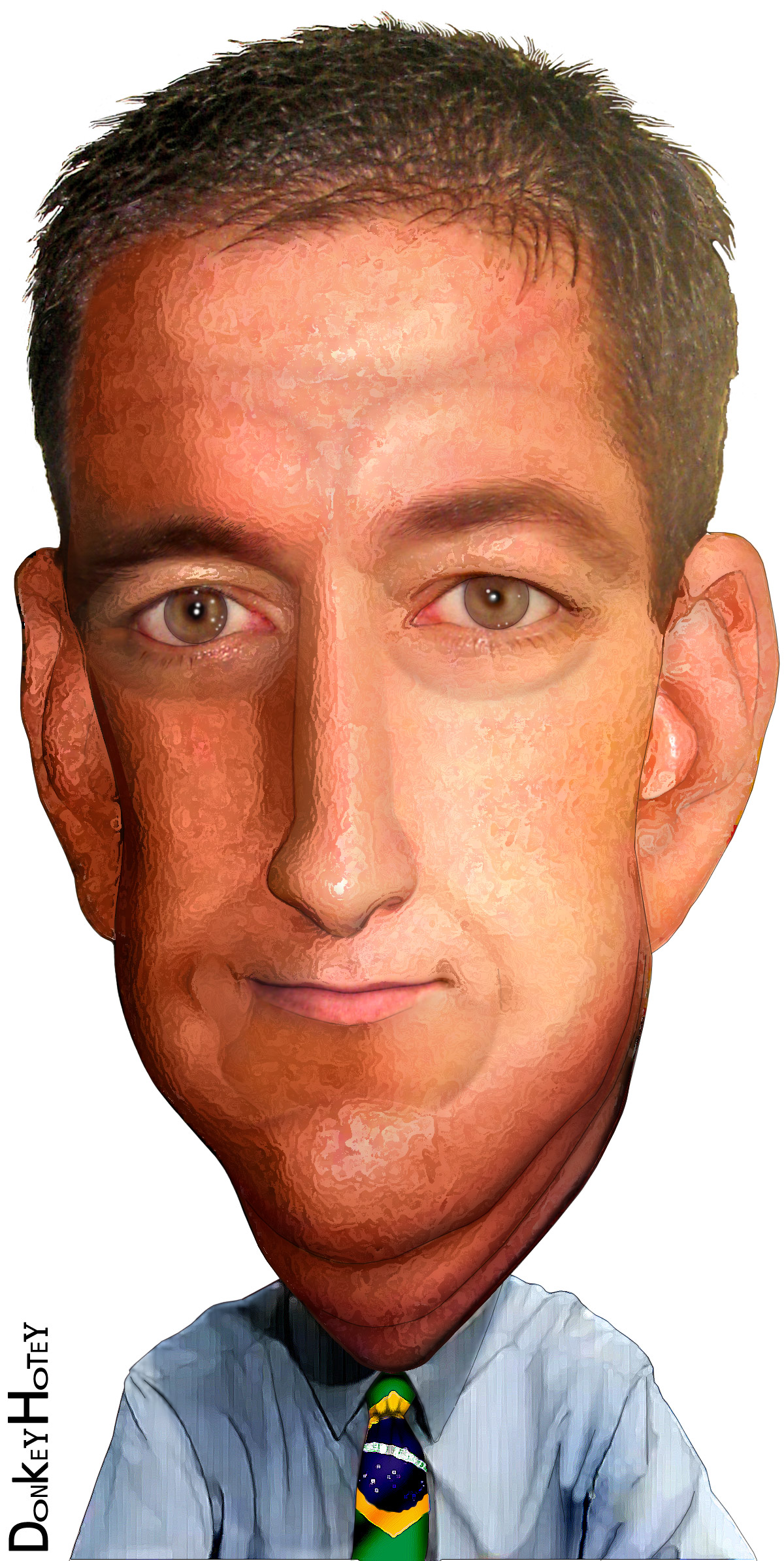
American journalist who published Snowden surveillance disclosures.

DonkeyHotey · CC BY-SA 2.0
Glenn Edward Greenwald is an American journalist, author, and former lawyer. He gained international prominence in 2013 when, while working for The Guardian, he published a series of reports based on classified documents provided by Edward Snowden that revealed details of global surveillance programs operated by the United States and the United Kingdom. His work contributed to The Guardian's 2014 Pulitzer Prize for Public Service and established him as a significant figure in investigative journalism.
- born
- March 6, 1967
- field
- Journalist, author, former lawyer
- nationality
- American
- known_for
- Publishing classified documents from Edward Snowden on global surveillance programs
Lore & Background
Glenn Greenwald was born in Queens, New York City, and moved to Lauderdale Lakes, Florida, as an infant. He attended Nova Middle School and Nova High School in Davie, Florida. Inspired by his grandfather's time on the Lauderdale Lakes City Council, Greenwald ran for an at-large seat on the council at age 17 in 1985, finishing fourth with 7% of the vote; he ran again in 1991, finishing third with 18%. He then focused on law school, earning a B.A. in philosophy from George Washington University in 1990 and a J.D. from New York University School of Law in 1994. His college debate team experience influenced his career path.
After practicing law at Wachtell, Lipton, Rosen & Katz from 1994 to 1995, Greenwald co-founded his own litigation firm in 1996, concentrating on First Amendment cases. He worked pro bono much of the time, representing clients such as white supremacist Matthew Hale, a leader of the World Church of the Creator. He wound down his practice in 2005, citing boredom and a desire to pursue political writing. He began blogging in October 2005 on national security issues, criticizing the George W. Bush administration's post-9/11 policies. He contributed to Salon from 2007 and joined The Guardian in 2012.
In June 2013, Greenwald began publishing reports based on documents from Edward Snowden, revealing previously unknown details about U.S. and British surveillance programs. The series contributed to The Guardian's 2014 Pulitzer Prize win, and Greenwald was among three reporters who won the 2013 George Polk Award. In 2014, he cofounded The Intercept, where he was an editor until resigning in October 2020. He later started his own newsletter and hosts the show System Update on Rumble.
Reader's Guide
Glenn Greenwald's significance lies primarily in his role as the journalist who, with Edward Snowden's classified documents, exposed the scale of global surveillance programs operated by the U.S. National Security Agency and its allies. The disclosures, published in The Guardian starting in June 2013, sparked worldwide debate on privacy, government overreach, and the balance between security and civil liberties. The work earned The Guardian the 2014 Pulitzer Prize for Public Service and Greenwald a share of the 2013 George Polk Award. His reporting also became the subject of the documentary Citizenfour, which won the 2014 Academy Award for Best Documentary Feature.
Beyond the Snowden revelations, Greenwald's career reflects a consistent focus on civil liberties and government accountability. He began as a First Amendment litigator, representing unpopular clients on principle, and later turned to political writing, becoming a vocal critic of the Iraq War and U.S. foreign policy. In 2019, through The Intercept Brasil, he published leaked conversations involving Brazilian officials in the Operation Car Wash corruption case, leading to cybercrime charges against him that were dismissed in 2020. His legacy is that of a journalist who has repeatedly challenged state secrecy and power, often attracting both praise and controversy.
Did You Know?
- Greenwald ran for a seat on the Lauderdale Lakes City Council at age 17 in 1985, finishing fourth with 7% of the vote.
- He represented white supremacist Matthew Hale, a leader of the World Church of the Creator, in a First Amendment case.
- Greenwald was played by actor Zachary Quinto in the 2016 film Snowden.
Early Life and Political Awakening
Glenn Edward Greenwald entered the world in Queens, New York City, in March 1967, but his formative years unfolded in Lauderdale Lakes, Florida, where his family relocated when he was still an infant. His parents separated when he was six, and although he was raised in a Jewish household, he has noted that his moral compass was never shaped by religious doctrine. Attending Nova Middle School and Nova High School in Davie, Florida, Greenwald found an early political spark through his grandfather's service on the Lauderdale Lakes City Council. That inspiration led him to mount a campaign for an at-large council seat at just seventeen in the 1985 elections, finishing fourth with seven percent of the vote. A second bid in 1991 improved his showing to third place with eighteen percent before he set aside electoral ambitions for the law school track. He earned a bachelor's degree in philosophy from George Washington University in 1990 and a Juris Doctor from New York University School of Law in 1994. He has credited his college debate team experience with cultivating the analytical skills and rhetorical drive that would steer his entire professional trajectory.
Legal Career and First Amendment Advocacy
After a brief stint in the litigation department at Wachtell, Lipton, Rosen & Katz between 1994 and 1995, Greenwald co-founded his own practice, initially called Greenwald Christoph & Holland and later renamed Greenwald Christoph PC. The firm concentrated on U.S. constitutional law and civil rights, and Greenwald devoted much of his time to pro bono work. His client list reflected a commitment to principle over comfort: he represented Matthew Hale, a white supremacist in Illinois whom Greenwald believed had been wrongly imprisoned, and the neo-Nazi National Alliance. In a 2013 interview with Rolling Stone, he articulated the philosophy behind such choices, describing it as a heroic attribute to apply a principle not only when it is easy or protects people you like, but when it defends those you despise. By 2005, after roughly a decade of full-time litigation, Greenwald voluntarily wound down his practice. He explained that he had grown bored with the courtroom grind and wanted to pursue political writing, which he felt could generate greater impact on the public conversation.
The Snowden Revelations and Journalistic Ascent
In October 2005, Greenwald launched his blog Unclaimed Territory, driven by growing alarm over what he saw as post-9/11 encroachments on civil liberties under the Bush administration. The blog earned the 2005 Koufax Award for Best New Blog, and his coverage of the Plame affair, the Scooter Libby indictment, and NSA warrantless surveillance drew attention from both parties. He became a contributing writer at Salon in 2007, where he was dubbed the American left's most fearless political commentator by Rachel Maddow. In 2012 he moved to The Guardian's American desk, seeking a broader international readership. The defining moment came in June 2013, when he began publishing a series of reports on American and British global surveillance programs based on classified material provided by NSA contractor Edward Snowden. That reporting helped The Guardian secure a 2014 Pulitzer Prize and earned Greenwald a share of the 2013 George Polk Award. The following year, he cofounded The Intercept, serving as an editor until his October 2020 resignation, after which he launched his own newsletter.
Brazil, Legal Repercussions, and Ongoing Commentary
Greenwald's willingness to publish leaked material drew him into a high-stakes confrontation with Brazilian authorities. In June 2019, through The Intercept Brasil, he released leaked conversations involving senior officials connected to Operation Car Wash, a corruption case in Brazil. The exchanges appeared to show that the investigative judge had acted prejudicially against Luiz Inácio Lula da Silva in the lead-up to the 2018 elections. The publication triggered a legal backlash: in January 2020, Brazilian prosecutors filed cybercrime charges against Greenwald over the disclosure. A federal judge dismissed those charges just one month later, clearing him of the accusations. Beyond Brazil, Greenwald has maintained a critical stance on American foreign policy and the Iraq War since the mid-2000s. After leaving The Intercept, he continued his independent publishing through a personal newsletter and now hosts the show System Update on the Rumble platform, sustaining his role as a voice challenging government overreach and advocating for transparency.
Gallery
Frequently Asked Questions
Who is Glenn Greenwald?
Glenn Greenwald is an American journalist, author, and former attorney born on March 6, 1967. He is best known worldwide for his investigative reporting at The Guardian, particularly his coverage of government surveillance programs.
What made Glenn Greenwald internationally famous?
In 2013, while at The Guardian, he published a major series of articles based on classified documents leaked by Edward Snowden. Those reports exposed the extent of U.S. and U.K. global surveillance operations and put Greenwald on the global stage.
What role did Glenn Greenwald play in the Snowden disclosures?
He served as the journalist who took the classified materials Snowden provided and turned them into published investigative reports for The Guardian. His reporting brought the details of mass surveillance programs to a wide public audience.
What major award is associated with Glenn Greenwald's work?
His reporting on the Snowden documents was instrumental in The Guardian earning the 2014 Pulitzer Prize for Public Service. That recognition cemented his standing as a leading figure in modern investigative journalism.
What was Glenn Greenwald's career before he became a journalist?
Before moving into journalism, he worked as a lawyer. His legal background and writing skills eventually led him to become a full-time journalist and author focused on civil liberties and government accountability.
More in Investigative Journalists And Editors 1-22
Spotted an error? Know more?
This is a living reference — every entry is fact-audited, and reader corrections feed straight into our audit queue. Suggest an edit · See this site's audit record