
Horace Greeley
Founder of the New-York Tribune and 1872 presidential candidate.

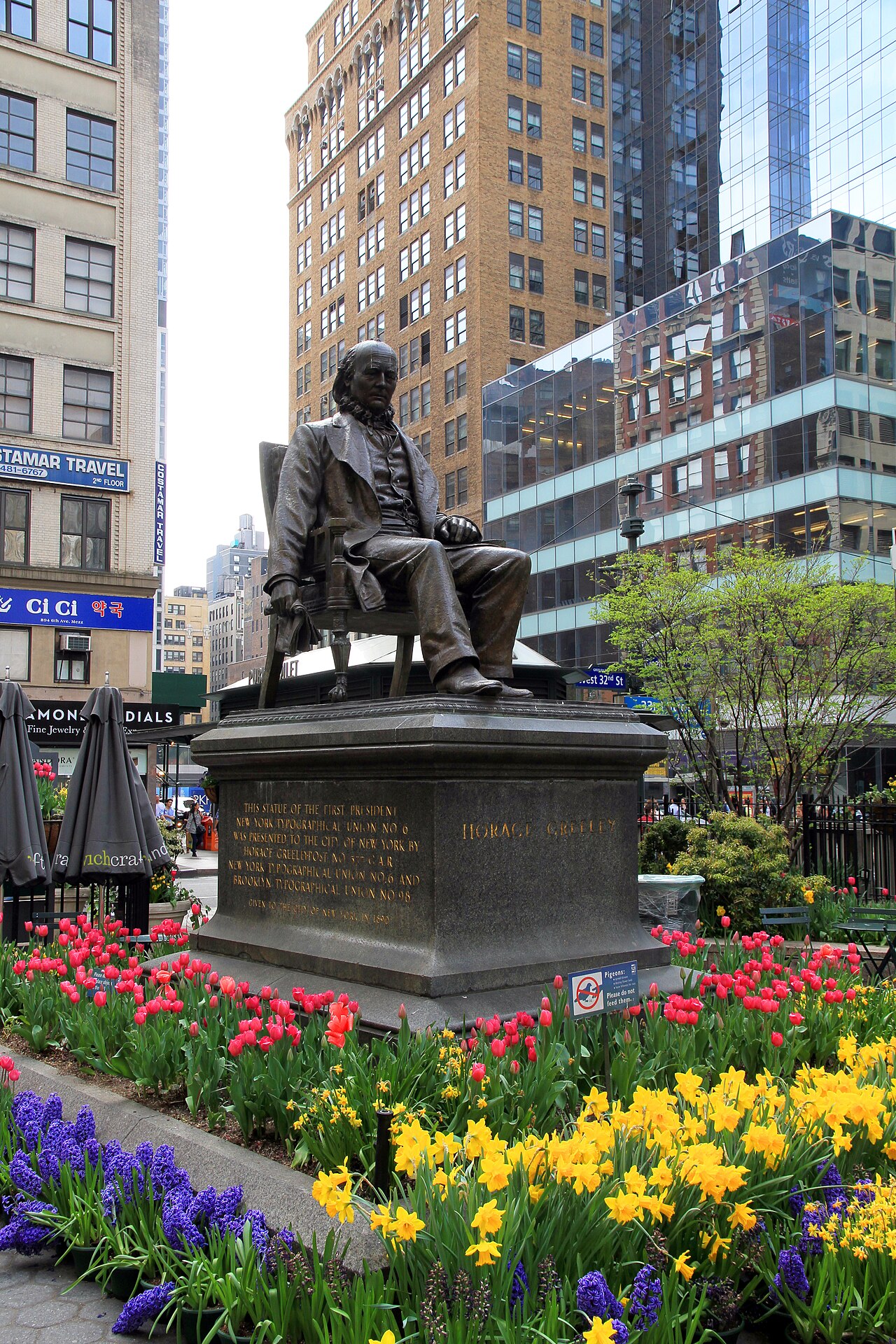
Statue by Alexander Doyle photo by Ingfbruno · Public domain
Horace Greeley was an American newspaper editor and publisher, best known as the founder and editor of the New-York Tribune. He was active in politics, serving briefly as a congressman from New York and running as the unsuccessful candidate of the Liberal Republican Party in the 1872 presidential election against incumbent Ulysses S. Grant.
- born
- February 3, 1811
- died
- November 29, 1872
- field
- Newspaper editor, publisher, politician
- nationality
- American
- known_for
- Founding and editing the New-York Tribune; popularizing the slogan 'Go West, young man, and grow up with the country'; 1872 presidential candidate
Lore & Background
Horace Greeley was born on February 3, 1811, to a poor family in Amherst, New Hampshire. He was apprenticed to a printer in Vermont and went to New York City in 1831 to seek his fortune. After working for several publications, he founded the New-York Tribune in 1841, which became the highest-circulating newspaper in the country through weekly editions sent by mail. Greeley urged the settlement of the American Old West, seeing it as a land of opportunity for the young and unemployed, and popularized the slogan 'Go West, young man, and grow up with the country.' He promoted radical reforms such as socialism, vegetarianism, agrarianism, feminism, and temperance.
Reader's Guide
Horace Greeley's significance lies in his role as a transformative figure in American journalism and politics. As founder and editor of the New-York Tribune, he shaped public opinion through widely reprinted editorials and championed westward expansion, influencing generations of settlers. His political career included helping found the Republican Party in 1854, serving three months in the U.S. House of Representatives, and supporting Abraham Lincoln during the Civil War while urging an early commitment to ending slavery. After Lincoln's assassination, Greeley supported Radical Republicans against Andrew Johnson but later broke with them and President Ulysses S. Grant over corruption and Reconstruction policies. His 1872 presidential campaign as the Liberal Republican and Democratic nominee ended in a landslide defeat, and he died one month after the election, devastated by his wife's death. Greeley's legacy endures as a voice for reform and a symbol of the power of the press in 19th-century America.
Did You Know?
- He was apprenticed to a printer at age 15 and later partnered with a friend to start a printing business in New York City in 1833.
- Greeley married Mary Young Cheney in 1835; both lived at a boarding house that followed the diet principles of Sylvester Graham, eschewing meat, alcohol, coffee, tea, and spices.
- He died one month after the 1872 election, prior to the meeting of the Electoral College.
From a New Hampshire Farm to the Printing Press
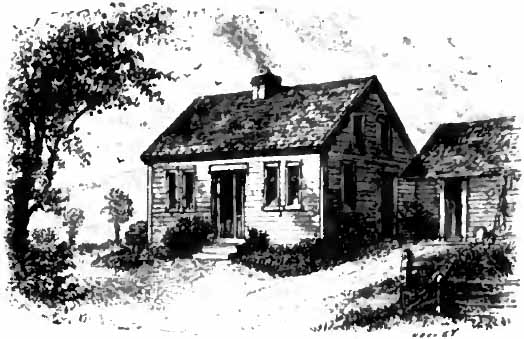
Greeley entered the world on a modest farm roughly five miles outside Amherst, New Hampshire, in the spring of 1811. His father, Zaccheus, was a struggling farmer whose repeated financial failures forced the family to relocate repeatedly, eventually fleeing to Vermont in 1820 to escape debtors' prison. Even in those lean years, the boy devoured every book he could reach, borrowing freely from a neighbor's library while his father worked as a hired hand. At twelve, he attempted to run away to become a printer's apprentice but was turned back for being too young. Five years later, at fifteen, he secured an apprenticeship with Amos Bliss, editor of the Northern Spectator in East Poultney, Vermont, where he mastered the mechanics of the trade and earned a local reputation as a walking encyclopedia. When that paper folded in 1830, Greeley drifted through Pennsylvania before finally arriving in New York City in 1831, where he would build an empire of ink and ideas. Along the way, he also broke from his Congregationalist roots and embraced Universalism.
The Tribune and a Vision for the Republic
After playing a prominent role in William Henry Harrison's triumphant 1840 presidential campaign, Greeley turned his considerable energy to building a newspaper that would reshape American public discourse. The following year he launched the New-York Tribune, which would go on to become the highest-circulating paper in the nation, largely thanks to weekly editions distributed by mail to readers far beyond the city. His editorial vision was remarkably broad. He championed the settlement of the American Old West as a frontier of opportunity for the young and the jobless, immortalizing the call to "Go West, young man, and grow up with the country." Beyond westward expansion, he tirelessly advocated for an eclectic mix of radical reforms—socialism, vegetarianism, agrarianism, feminism, and temperance—while hiring a deliberately diverse staff. The paper's reach was enormous: Republican newspapers across the country routinely reprinted his editorials, making Greeley one of the most influential voices in antebellum and wartime America.
A Political Life in Constant Motion
Greeley's political allegiances shifted dramatically over four decades, reflecting both his convictions and his willingness to challenge the powerful. He began in Whig Party politics, helping to organize the 1840 Harrison campaign. His alliance with William H. Seward and Thurlow Weed eventually carried him into the U.S. House of Representatives for a brief three-month stint, where he made enemies by using his newspaper to investigate congressional conduct. In 1854 he helped found the Republican Party, and during the Civil War he largely backed President Lincoln while pressing him to commit publicly to the abolition of slavery before the president was prepared to do so. After Lincoln's assassination, Greeley threw his support behind the Radical Republicans in their fight against Andrew Johnson. Yet by the late 1860s and early 1870s, he had broken with both the Radicals and President Grant, citing party corruption and his conviction that Reconstruction-era policies had outlived their purpose. This rupture set the stage for his final, fateful political bid.
The 1872 Campaign and a Tragic Ending
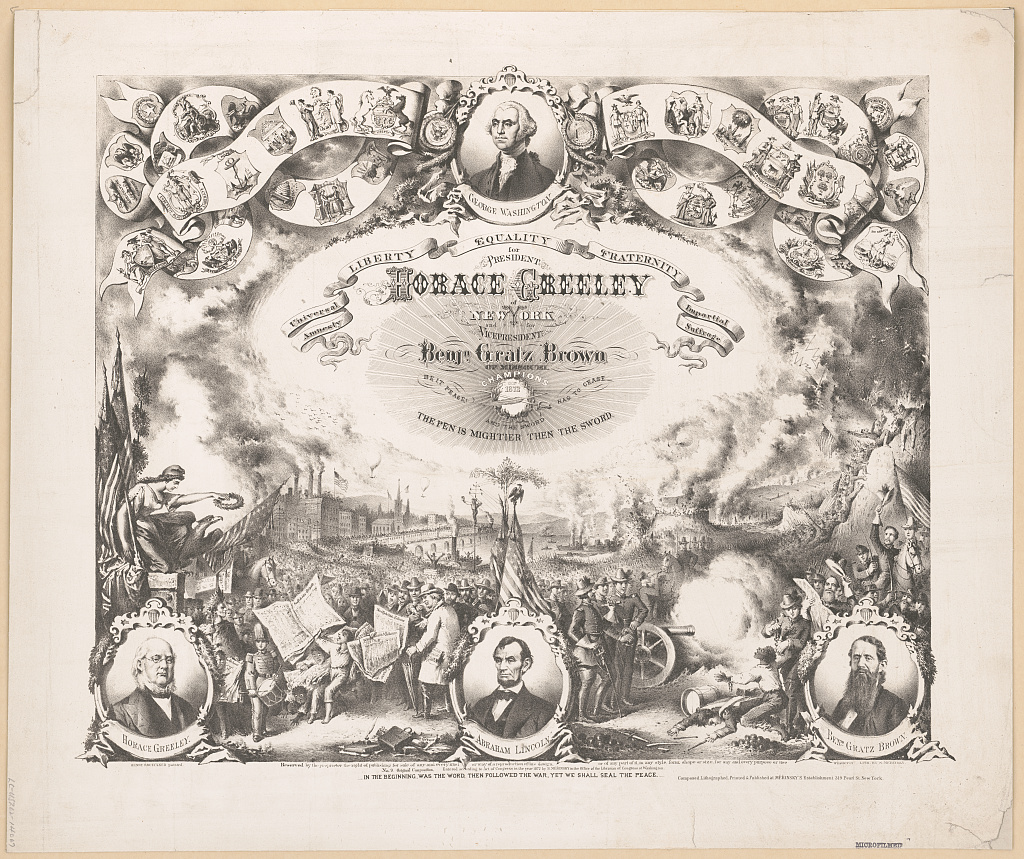
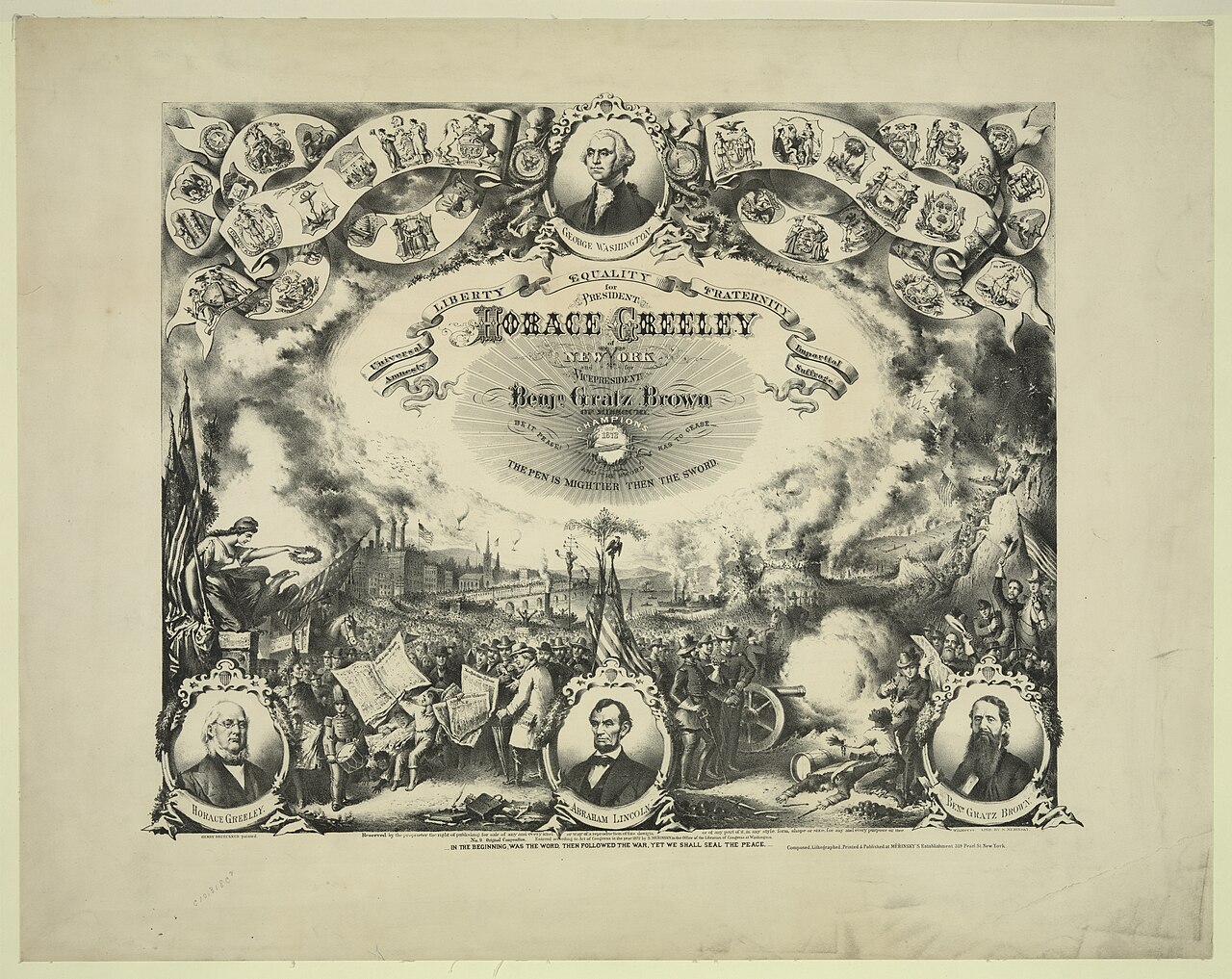
In 1872, Greeley accepted the presidential nomination of the newly formed Liberal Republican Party, a group that had split from the Republicans over corruption and the direction of Reconstruction. Remarkably, the Democratic Party also placed his name on its ticket, giving him a rare dual nomination. His opponent was the incumbent, Ulysses S. Grant, and the result was a devastating landslide that ended Greeley's political ambitions. The campaign's final days were marked by personal catastrophe: his wife died just five days before Election Day, a blow that shattered him emotionally. He never recovered from the combination of political defeat and personal loss. Greeley died on November 29, 1872, a full month after the election and before the Electoral College ever convened to cast its votes. The man who had once urged a generation to "Go West, young man" was gone at sixty-one, his life cut short by grief and the weight of a cause that had consumed him for decades.
Gallery
Frequently Asked Questions
Who is Horace Greeley?
Horace Greeley (1811–1872) was an American newspaperman, publisher, and politician who rose to become one of the 19th century's most prominent editorial voices. He is best known for building the New-York Tribune into a nationally influential paper and for his brief, unsuccessful bid for the presidency.
What newspaper did Horace Greeley found and edit?
Greeley founded and served as editor of the New-York Tribune, which became his primary platform for political commentary and social advocacy. Under his leadership the paper reached a wide national readership and shaped public debate on issues ranging from labor reform to foreign policy.
What is the famous 'Go West, young man' quote?
Greeley popularized the exhortation 'Go West, young man, and grow up with the country,' which became a cultural catchphrase for the era of American westward expansion. The line captured the optimistic, frontier-minded spirit of mid-19th-century settlement and is still quoted today as shorthand for that period.
Did Horace Greeley run for president?
Yes—in 1872 he was nominated as the Liberal Republican Party's presidential candidate and ran against incumbent Ulysses S. Grant. Greeley lost the election and died in late November 1872, just weeks after the vote.
Why is Horace Greeley important to journalism history?
Greeley is considered a pivotal figure because he demonstrated how a single editor could use a newspaper as a tool for national political influence and social reform. His career at the New-York Tribune set a precedent for the editorially driven, advocacy-oriented press that defined much of 19th-century American journalism.
More in Investigative Journalists And Editors 1-22
Spotted an error? Know more?
This is a living reference — every entry is fact-audited, and reader corrections feed straight into our audit queue. Suggest an edit · See this site's audit record