
Hu Shuli
Founder of Caixin Media and influential Chinese journalist.

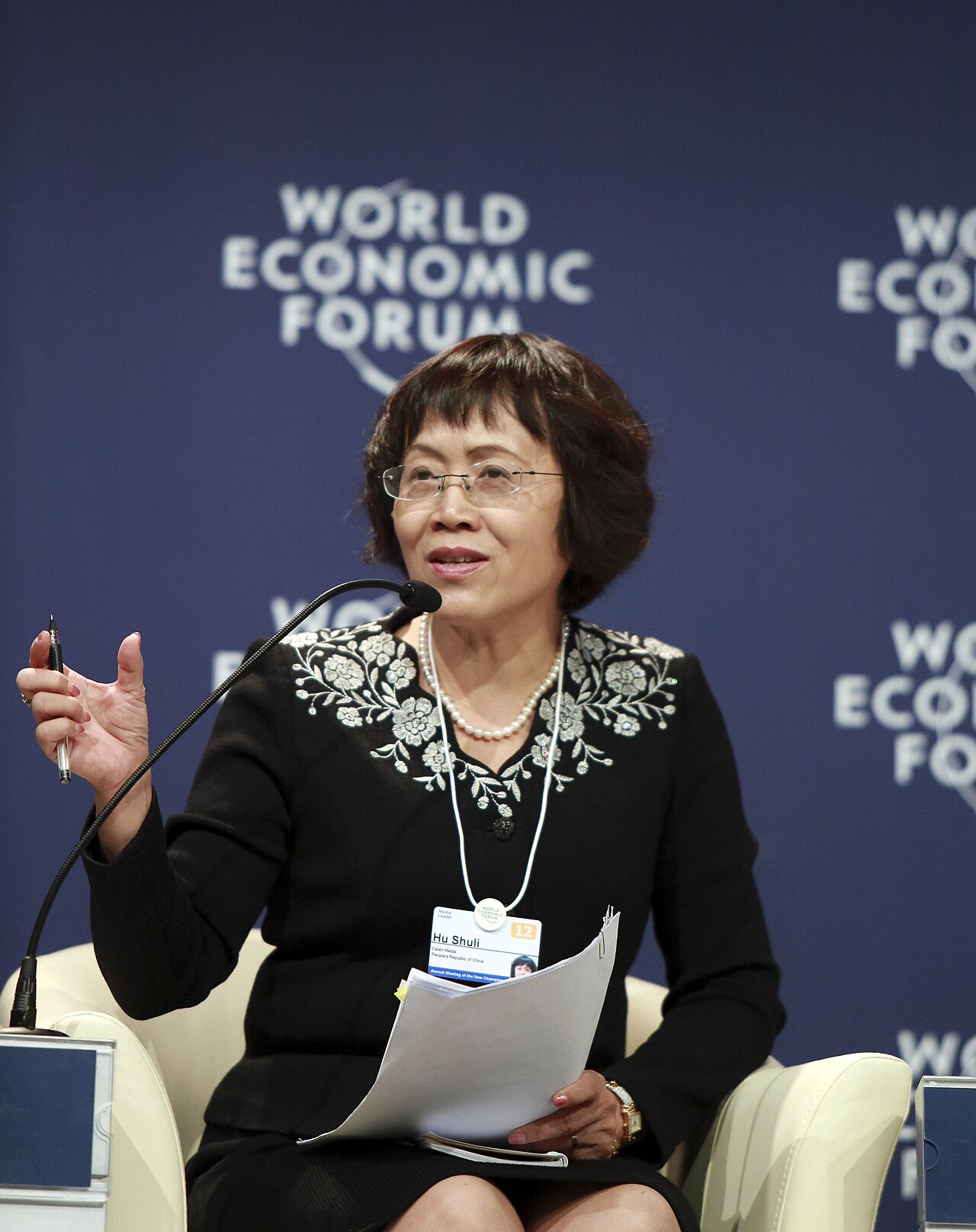
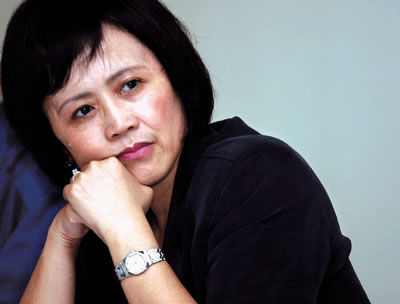
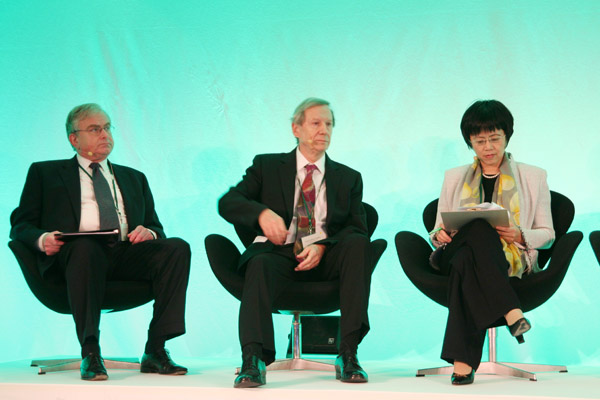
World Economic Forum from Cologny, Switzerland · CC BY-SA 2.0
Hu Shuli (born 1953) is a Chinese journalist and media executive, best known as the founder and publisher of Caixin Media. She is also a professor at the School of Journalism and Communication at Peking University and an adjunct professor at Renmin University of China. Her career is marked by her founding of Caijing magazine in 1998 and her subsequent departure in 2009 with most of its editorial staff to launch Caixin Media, a breakthrough new media group.
- born
- 1953
- field
- Journalism, Media
- nationality
- Chinese
- known_for
- Founder and publisher of Caixin Media; founder of Caijing magazine
Lore & Background
Before founding Caijing in 1998, Hu worked as assistant editor, reporter, and international editor at Workers' Daily, and later as international editor and chief reporter at China Business Times. She also served as a commentator or anchor for a financial program on Phoenix TV in 2001. In November 2009, she resigned from Caijing along with most of its editorial staff (around 40-50 people), shortly after the resignation of Daphne Wu Chuanhui and a number of employees from the business department, to create Caixin Media, where she acted as editor-in-chief. The first issue of Century Weekly under Caixin Media was published on January 4, 2010.
Reader's Guide
Hu Shuli's significance lies in her role as a pioneering figure in Chinese investigative journalism and media entrepreneurship. Her founding of Caijing magazine in 1998 established a platform for rigorous financial reporting, and her dramatic departure in 2009 to launch Caixin Media demonstrated her commitment to editorial independence, even at the cost of organizational upheaval. Under her leadership, Caixin's editorial team won the 2011 Shorenstein Journalism Award from Stanford University. Her influence extends beyond China: she serves on the International Media Council of the World Economic Forum and has been recognized by Fortune, Time, and Foreign Policy. Her awards include the Ramon Magsaysay Award (2014), the Missouri Honor Medal for Distinguished Service in Journalism (2012), and an honorary doctorate from Princeton University (2016). Hu's legacy is that of a journalist who navigated China's complex media landscape while maintaining a reputation for integrity and impact.
Did You Know?
- Hu Shuli's grandfather, Hu Zhongchi, was a translator and editor at Shen Bao.
- She earned an EMBA through a joint program between Fordham University and Peking University in 2002.
- In November 2009, she resigned from Caijing along with most of its editorial staff (around 40-50 people) to create Caixin Media.
- She was awarded the 2007 Louis Lyons Award for Conscience and Integrity in Journalism by the Nieman Foundation at Harvard University.
From Newsroom to Empire: A Career Built on Independence
Hu Shuli's professional trajectory traces a steady arc from staff reporter to media entrepreneur. After graduating from Renmin University of China in 1982, she spent years at China's second-largest newspaper, the Worker's Daily, progressing through assistant editor, reporter, and international editor roles. In 1992 she moved to China Business Times, where she rose to chief reporter by 1995. That period of growth culminated in a bold leap: in 1998 she left to found Caijing magazine, a financial publication that became a major voice in Chinese business journalism. She also held a financial news chief position at Phoenix TV in 2001, broadening her reach into television. Beyond the newsroom, she authored several books, including New Financial Time, Reform Bears No Romance, and The Scenes Behind American Newspapers, reflecting her interest in both domestic reform and the mechanics of Western press. Her career is marked by a consistent pattern of building platforms rather than merely occupying them, a trait that would define her most consequential decision in 2009.
The 2009 Break: Resignation and the Birth of Caixin
In November 2009, Hu Shuli made a decision that reshaped Chinese media. Along with roughly ninety percent of Caijing's journalists, she resigned from the publication she had founded just eleven years earlier. The walkout came in the wake of a mass departure from the business department, where Daphne Wu Chuanhui and nearly seventy employees had already left. Rather than staying on as a diminished figure, Hu chose to start over from scratch. Within weeks she had assembled Caixin Media, a new media group over which she served as editor-in-chief. The first issue of its flagship publication, Century Weekly, hit newsstands on January 4, 2010. The speed and scale of the reorganization drew vivid commentary; Chinese blogger Hecaitou captured the moment with the line that she has blood on her blade and her clothing smells of gunpowder. The episode cemented Hu's reputation as a journalist who would rather build a new institution than compromise an existing one, and it set the stage for the international recognition that followed in the years after.
A Global Constellation of Recognition
Hu Shuli's work has earned her an extraordinary breadth of honors spanning journalism, leadership, and public service. In 2014 she received the Ramon Magsaysay Award, and in 2012 the Missouri Honor Medal for Distinguished Service in Journalism. Her Caixin editorial team was named the 2011 Shorenstein Journalism Award winner at Stanford, and she personally collected Taiwan's Hsing Yun Journalism Award that same year. Time magazine placed her on its Top 100 Influential People list in 2011, while Foreign Policy named her a Top 100 Global Thinker in both 2009 and 2010. Earlier accolades include the 2007 Louis Lyons Award for Conscience and Integrity in Journalism from Harvard's Nieman Foundation, the 2003 International Editor of the Year title from World Press Review, and a spot on BusinessWeek's Fifty Stars of Asia in 2001. In 2006 the Financial Times called her China's most powerful commentator, and The Wall Street Journal listed her among Asia's Ten Women to Watch. More recently, Fortune named her one of the World's Greatest Leaders in 2017, and Princeton University conferred an honorary doctorate in 2016. She also serves on the International Media Council of the World Economic Forum.
Roots in a Publishing Dynasty and a Scholar's Path
Hu Shuli was born in Beijing in 1953 into a family deeply embedded in print culture. Her grandfather, Hu Zhongchi, served as a translator and editor at the Shen Bao newspaper, while his brother Hu Yuzhi (1896–1986) championed language reform, the use of Esperanto, and literary realism, and was active in editing and publishing. Her mother, Hu Lingsheng, was a senior editor at the Workers' Daily, and her father, Cao Qifeng, held a midlevel position in a trade union. An older sister, Cao Zuoya, studied at San Diego State University. Hu attended Beijing's 101 Middle School before earning a place at Renmin University of China when college admissions resumed in 1978, graduating in journalism in 1982. She later pursued further study abroad: in 1994 she was a Knight Journalism Fellow at Stanford, focusing on development economics, and in 2002 she completed an EMBA through a joint program between Fordham University and the China Center for Economic Research at Peking University. Today she holds a professorship at Sun Yat-sen University's School of Journalism and Communication and serves as adjunct professor at Renmin University of China's equivalent school, connecting her decades of newsroom practice with formal academic mentorship.
Gallery
Frequently Asked Questions
Who is Hu Shuli?
Hu Shuli is a Chinese journalist and media executive born in 1953, best recognized for building one of China's most prominent independent news organizations. She is the founder and publisher of Caixin Media and a well-known figure in the country's financial and investigative reporting scene.
What is Hu Shuli most known for?
She launched Caijing magazine in 1998, which grew into a major financial publication in China. In 2009 she departed with the bulk of its editorial team to found Caixin Media, a new media group that became a landmark in Chinese independent journalism.
What academic roles does Hu Shuli hold?
She serves as a professor at Peking University's School of Journalism and Communication. She also holds an adjunct professorship at Renmin University of China, bridging her industry experience with classroom teaching.
How did Hu Shuli enter the media industry?
Her path into media leadership began when she founded Caijing magazine in 1998, establishing a publication focused on in-depth financial and economic reporting. That venture laid the groundwork for her later, larger project, Caixin Media.
Why is Hu Shuli considered important in Chinese journalism?
She is widely viewed as a pioneer who helped reshape the landscape of financial and investigative reporting in China by building independent outlets from the ground up. Her 2009 split from Caijing to create Caixin Media is often cited as a turning point that demonstrated the viability of editorially independent media in the country.
More in Investigative Journalists And Editors 1-22
Spotted an error? Know more?
This is a living reference — every entry is fact-audited, and reader corrections feed straight into our audit queue. Suggest an edit · See this site's audit record